
We may earn a commission from links on this page.
TechNvidia Rejects RTX 5090 Production Rumor Amid Supply Constraints

Jeff Fisher says Nvidia will keep supplying the RTX 5090. Reference specifications show why power, clearance and the exact board model still matter for an upgrade.
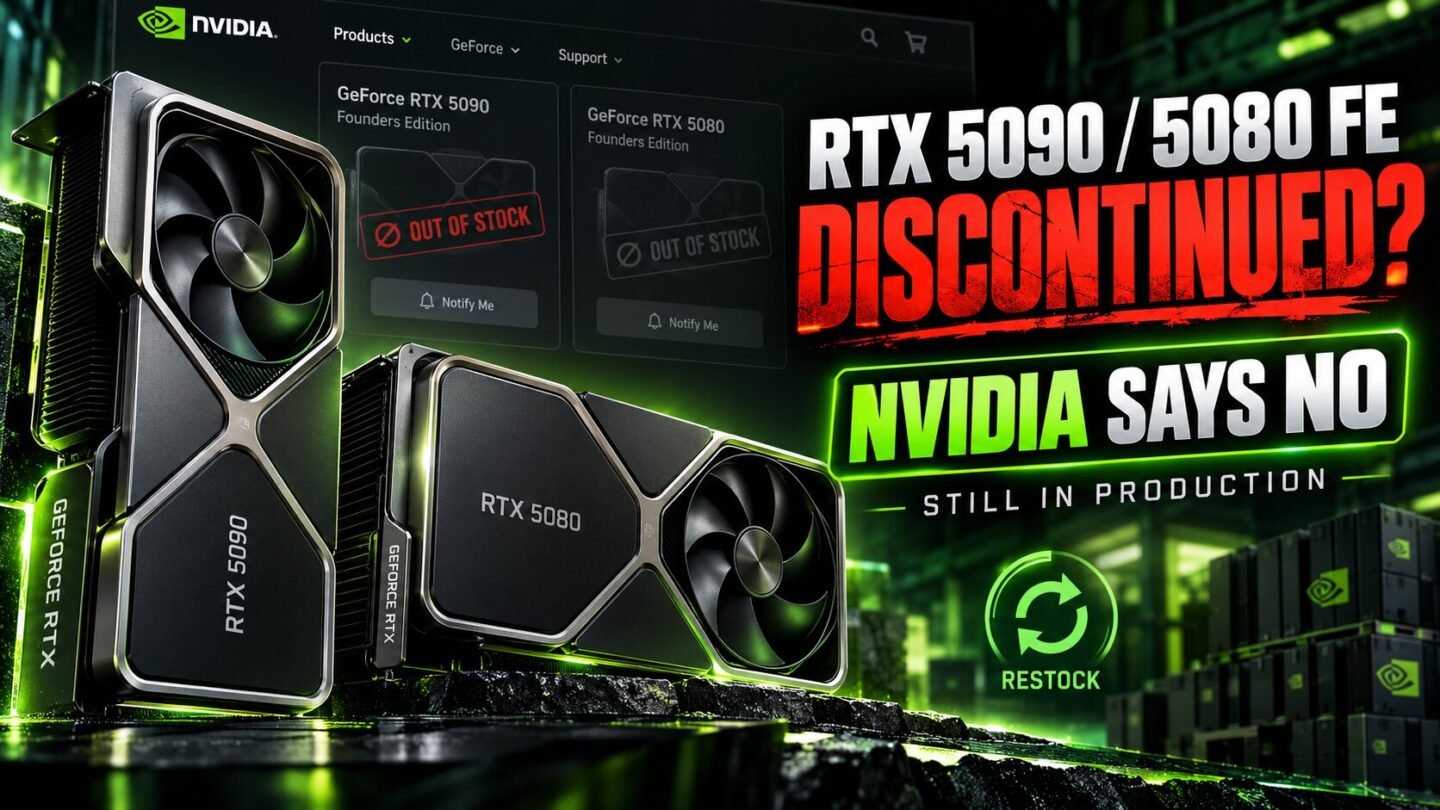
Nvidia executive Jeff Fisher has rejected claims that the RTX 5090 is being discontinued, giving buyers a direct response to a rumor fueled by missing storefront listings. Continuing production still leaves the company dealing with wider supply constraints.
CNA’s October 16 interview report records Fisher saying Nvidia will continue supplying the card. The distinction for shoppers is availability: a production commitment does not put every model in stock at every retailer.
RTX 5090 reference specifications
Nvidia’s RTX 5090 specifications list the following reference details. Partner-board dimensions and requirements can differ.
| Published detail | Reference specification |
|---|---|
| Memory | 32GB GDDR7. |
| Total graphics power | 575W. |
| Reference system-power requirement | 1000W, under NVIDIA’s reference-system assumptions. |
| Founders Edition length | 304mm. |
| Founders Edition width | 137mm. |
| Founders Edition thickness | Two slots. |
A shop listing that says only RTX 5090 is not enough for a fit check. Identify the manufacturer and full model number, then use that model’s own installation guidance.
Allow space for the board and its connections
Measure from the expansion-slot area to the nearest obstruction in the case. Include any front-mounted radiator or drive cage that occupies the card’s path. Then check clearance toward the side panel for the power connection, following the cable and card manufacturers’ routing instructions.
Slot thickness matters separately from length. A card can fit front to back while blocking another expansion card or leaving an unsuitable gap around an intake. The reference dimensions should be a starting point for a named Founders Edition, not a substitute for checking a larger partner design.
575W graphics power and a 1000W system requirement
NVIDIA lists 575W for the graphics card and 1000W for required system power. Its footnote bases the latter on a Ryzen 9 9950X configuration and notes that requirements can differ. A 575W graphics specification is therefore not a recommendation to buy a 575W computer power supply.
The reference connection options are four PCIe eight-pin cables through the supplied adapter, or a 600W PCIe Gen 5 cable. Follow the exact card and PSU documentation for the actual installation. Cable compatibility and routing should follow the instructions for the exact card and power supply.
These numbers help explain why availability and a sensible upgrade are separate questions. An attractive card price may still require a power-supply or case change. Count that hardware before comparing the total upgrade with keeping the existing machine.
What to check in an actual offer
Before ordering, distinguish a dispatchable unit from a preorder or an uncertain restock estimate. Check who supplies the warranty and handles a return. Those details belong to the actual offer, even while Nvidia continues producing the product.
Fisher’s denial addresses the production rumor. A purchase still comes down to a named board, a dependable delivery date and the total cost of fitting it into the existing machine. Any required power-supply or case changes belong in that budget alongside the card itself.



1 Comment